
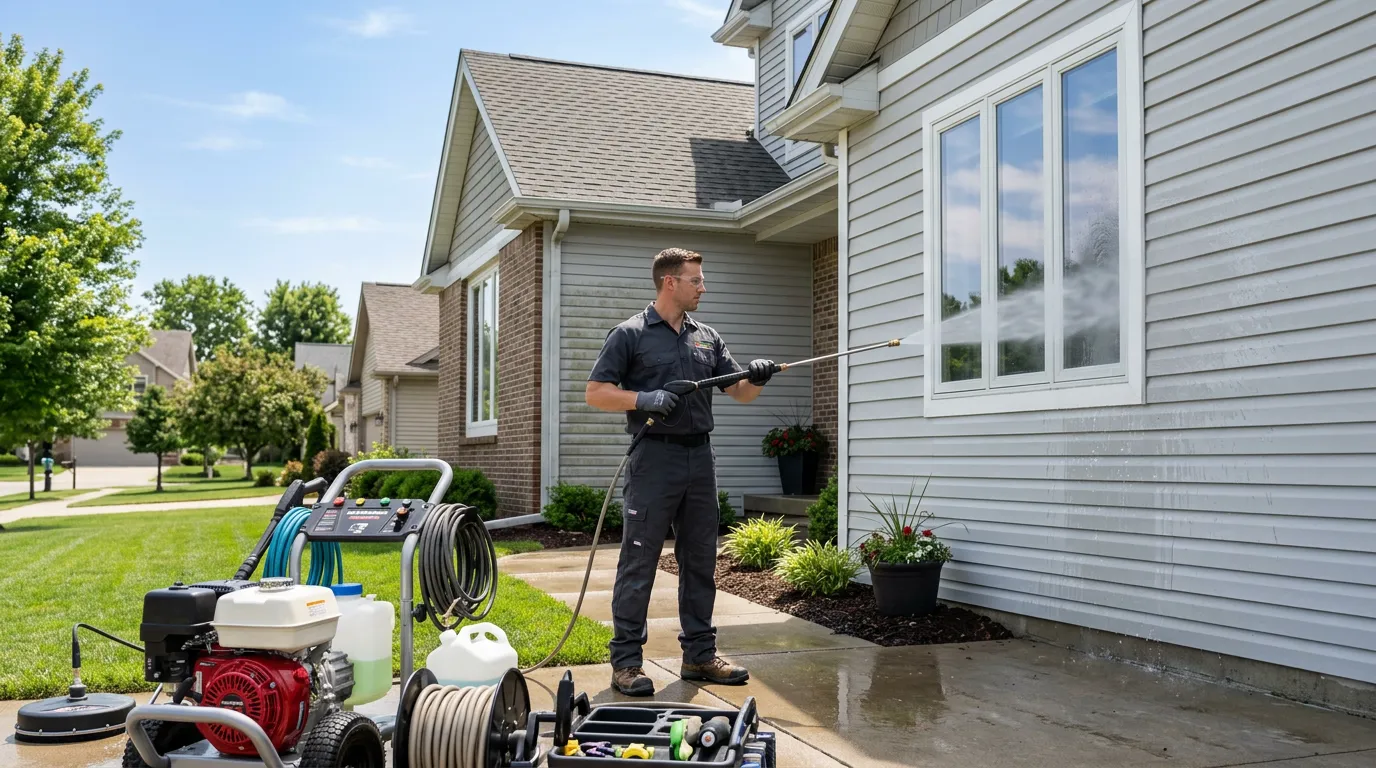


If you are unsure how often you should pressure wash your house or whether annual cleaning is really necessary, this guide is for you.
Backed by 20 years of professional cleaning experience, we are going to discuss how often to wash your home, when to schedule service, typical costs, and the signs your property needs attention.
Power Washing vs. Pressure Washing Your Home
- It is ideal to have professional pressure washing of your home every 12 to 24 months.
- Spring and fall are the optimal seasons for power washing.
- Dull siding, green or black streaks (mold/algae), or slippery walkways are clear signals that your home needs power washing.
- You should avoid using high pressure on fragile spots like windows, roof shingles, or older painted wood.
- Depending on your home’s size, you can generally expect to pay between $250 and $800 for a professional power washing service.
- Hiring a pro helps you skip common and costly mistakes, like accidentally stripping paint or blowing out window seals.
What Is Power Washing a House?
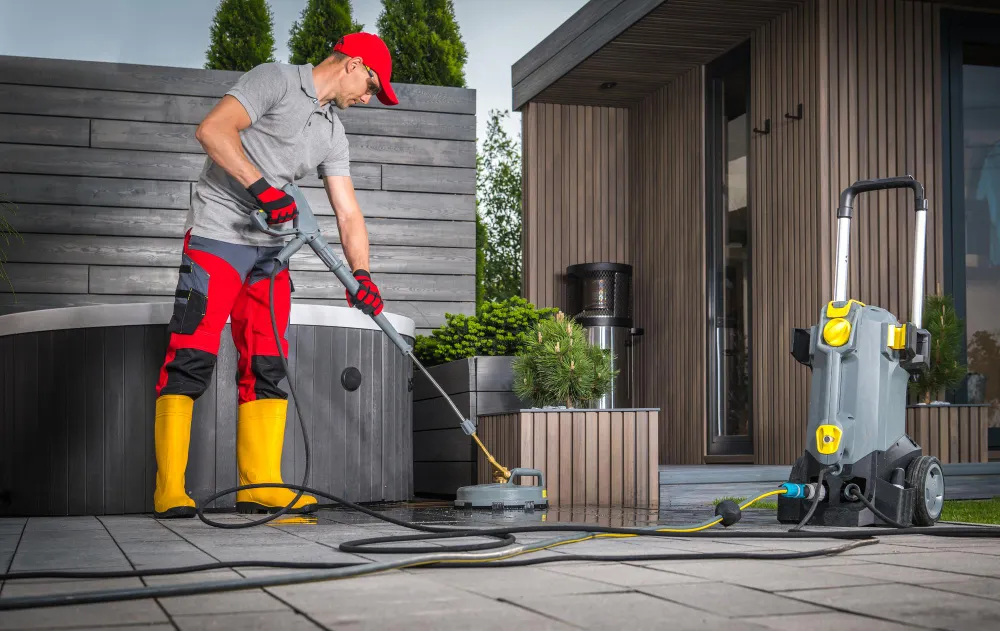
Power washing a house is the process of using high-pressure water to remove dirt, mold, mildew, algae, and grime from your home’s exterior surfaces. It helps restore your home’s appearance, protects it from damage, and keeps it looking clean, fresh, and well-maintained.
This method allows you to get a pristine shine while experiencing the benefits of using eco-friendly cleaning services around your lawn and gardens.
Unlike a basic garden hose, a professional power washing system does the following:
- Draws water into a pump
- Heats it to over 200°F
- Fires it through a nozzle.
The heated water makes the cleaning process more effective by breaking down grease and stubborn grime. It melts away oily films and gets deep into the pores of your siding to lift out mold and algae without needing to use aggressive pressure that could potentially damage your home.
Power Washing vs. Pressure Washing
Many homeowners use the terms “power washing” and “pressure washing” interchangeably, but they are technically different cleaning methods. Power washing uses heated water to melt through grease and grime, while pressure washing uses unheated water and cleaning pressure to remove dirt and debris.
Knowing which one you need ensures you get the right results without overdoing it at home.
| Feature | Power Washing | Pressure Washing |
| Water Temp | Heated (200°F+) | Cold |
| Primary Benefit | Melts oils and heavy grease | Dislodges mud and surface dirt |
| Best For | Driveways, grease-heavy areas | Vinyl siding, wood decks, walkways |
| Efficiency | Faster (heat does the work) | Depends on pure force |
Why Regular Power Washing Matters
Think of power washing like changing the oil in your car. It’s a basic chore that prevents major issues down the road. Here is why it’s so important:
- Protects Your Exterior: Bird droppings, road exhaust, and other pollutants are actually acidic. If they sit on your siding for too long, they start to eat into the finish. Regular washing stops this decay.
- Stops Organic Growth: Mold, algae, and mildew are living things. They feed on your home’s exterior and will slowly rot or warp wood and siding if they aren’t removed.
- Boosts Curb Appeal: A clean exterior instantly improves your home’s appearance and creates a positive first impression.
- Preserve Property Value: A clean exterior helps maintain your property’s appearance and may support its long-term value. It is the easiest way to show that a home is well-loved.
Note: To maximize these protective benefits and keep your property value high, make sure to choose the right cleaning services for your home that fit your specific exterior materials.
Signs Your Home Needs Power Washing
You don’t always need a calendar to know when it is time for a wash. Often, your home will show you signs when it needs some attention:
- Discoloration: If your home looks gray or tired compared to when it was new, that is just a layer of pollution film.
- Green or Black Streaks: This is almost always mold or algae. Once these start growing, they don’t stop on their own.
- Slippery Walkways: If your driveway becomes slippery when wet, you have an algae buildup that needs to be stripped off for safety.
- Preparing to Paint: If you’re planning to paint, you have to power wash first. Paint adheres much better to a clean surface, making pressure washing an important step before repainting.
How Often Should You Pressure Wash a House?
We recommend a power wash every 12 to 24 months for residential homes. Many homeowners make the mistake of waiting until their house looks visibly dirty, but by the time you see deep-seated mold or heavy grime, it may have been damaging your property for months.The goal is to remove buildup before it causes staining or long-term surface damage.
To understand this goal better, take a project we recently handled: a power-washed home in a heavily wooded area that hadn’t been cleaned in four years. Because their north-facing wall stayed in constant shade and dampness, thick algae had formed, leaving noticeable staining and increasing the risk of long-term surface damage.
A yearly cleaning schedule would likely have reduced the buildup and helped protect the siding. Every home is different, but this example shows why your cleaning schedule should reflect your property’s surroundings and exposure to moisture.
Here is our recommended maintenance schedule for the most common exterior surfaces.
| Area | Recommended Frequency |
| House siding | Every 1–2 years |
| Driveway | Once a year |
| Patio | Once a year |
| Deck | Every 1–2 years |
| Fence | Every 2–3 years |
| Garage door | Annually |
Note: These recommendations are general guidelines. Your ideal cleaning schedule may vary depending on a few key factors, which we’ll cover in the next section.
What Affects How Often You Should Power Wash Your House?
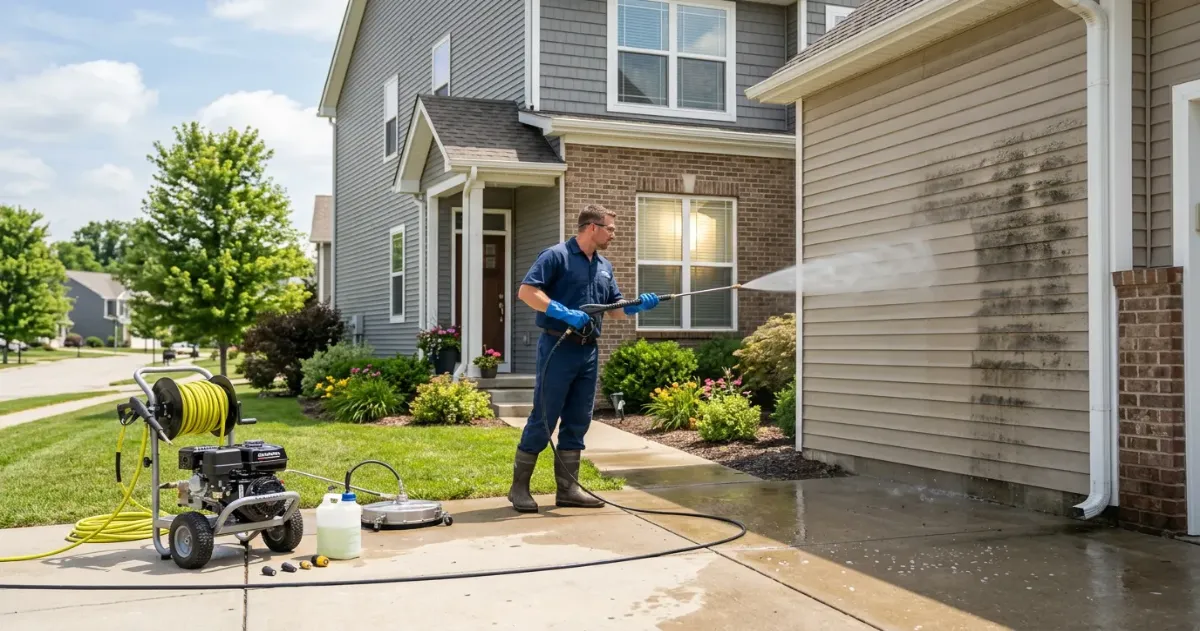
While the 12–24-month window is a solid baseline, these factors mean your home may need more frequent care:
Weather
We have humid summers, which means mold grows quickly on damp, shaded exterior walls. If your home has walls that stay in the shade, you’ll likely need a wash more often to keep growth at bay.
Trees
If your house is tucked into the woods, your siding is going to stay damp and catch sap. This creates ideal conditions for dirt, sap and organic debris to collect on your siding.
Traffic
Living near a busy road means your home catches exhaust and heavy dust, which bond to the siding and make it look dull faster, often necessitating proactive cleanings to maintain its appearance.
Surfaces
Brick and stucco are porous, meaning they soak up dirt. If you have a patio that gets a lot of foot traffic, more dirt, moisture, and organic debris collect on these surfaces over time.
Best Time to Power Wash a House
Spring is the ideal time to wash away the salt, grit, and grime left behind by winter. If you miss the spring window, autumn is an excellent alternative to clear out seasonal pollen and leaves before the winter dampness sets in.
When You Should Avoid Power Washing
Don’t power wash your house when it is freezing outside. The water can seep into cracks and freeze, which may cause structural damage.
Also, if your home has old lead-based paint, skip the power washer entirely. High-pressure water can spread lead particles into your soil, which creates a serious safety hazard.
What is the Average Cost to Powerwash a House?
Pricing changes based on your home size and the area you need to be cleaned. In 2026, most homeowners in our area pay between $250 and $800 for a full house wash.
Below are the standard ranges to give you an idea of what to expect:
| Service Area | Estimated Price Range |
| Single-Story Home | $250 – $500 |
| Two-Story/Larger Home | $400 – $800 |
| Driveway Only | $100 – $300 |
| Deck/Patio | $150 – $500 |
Note: These are estimates for typical residential jobs. If you have historic brick that needs special care or extreme height requirements, the price may shift.
DIY vs. Professional Power Washing: Which Should You Choose?
Renting a machine for DIY power washing feels like a way to save money, but we often see such attempts resulting in damage costing far more than a professional service.
Using a professional power washing service means knowing exactly how cleaning solutions react with your specific siding and how to manage pressure so you don’t etch your wood or strip your paint.
When you hire pros, you are paying for the insurance, the commercial-grade gear, and the peace of mind that comes with knowing the job is done right the first time.
Here is how the two approaches compare:
| Factor | DIY Approach | Professional Approach |
| Risk | High (Stripped paint/etching) | Low (Trained & Insured) |
| Equipment | Consumer-grade | Commercial-grade |
| Results | Often uneven/patchy | Deep, even clean |
| Time | Entire weekend | Fast and efficient |
Conclusion
Dirt builds up on your home’s exterior, algae spreads across shaded walls, and mold grows in damp corners. If left untreated, this buildup can gradually wear down exterior surfaces over time. Power washing once or twice a year gets rid of that buildup before it eats into your paint or siding, which saves you from paying for repairs later.
Need a quick refresh or a full deep clean to bring your house back to how it looked when it was new? Alex Cleaning can handle it. Call us at (215) 677-9717 for a free quote.
FAQs
Is it safe to power wash with pets or kids around?
Yes, it is totally safe. The soaps used are eco-friendly and won’t hurt the kids, the pets, or the landscaping. Everything gets a really good rinse before the job is called done, so there’s nothing left behind to worry about.
Can I wash my house too often?
If you go too hard with high pressure all the time, you’ll eventually damage the paint or siding. We use “soft washing” (low pressure and soap) and can clean your home without the abrasive force whenever you need.
Why does mold come back after I have power washed the house?
Mold spores are everywhere in the air. If you have a wall that never sees the sun or stays damp, mold is going to find a way to grow there. The trick is using professional cleaners that actually kill the roots, not just wash the surface. Mold may come back, but it takes a lot longer that way.