

You may have heard that vinegar works well for cleaning floors and wondered if you should try it at home. Right? But is it safe for your floors or not? And let’s suppose it is safe. Do you know how to prepare that vinegar cleaning solution and how to apply it perfectly?
In this guide, you will learn whether vinegar is suitable for your flooring or if you should avoid it. So, read it till the end.
Is Vinegar Good for Cleaning Floors?
It can be a good cleaner for some kinds of floors, but saying it works for all types is wrong. The key is knowing which flooring materials can tolerate vinegar without causing damage.
You might apply it to a surface that reacts quickly or suffers from long-term use.
But before we cover which floors it supports, you should understand how it works as a cleaner on some surfaces and how it may damage others.
How Does Vinegar Work as a Floor Cleaner?
We all know that vinegar is acidic, and its acidic property is what makes it a floor cleaner. Vinegar contains acetic acid, a colourless organic compound that gives vinegar its sour taste and strong smell. It is the acid that makes vinegar taste sour and smell pungent.
The same ingredient is usually used in many store-bought cleaning products. When you apply acetic acid to a floor, it directly reacts with particles on the ground and starts to dissolve them immediately.
According to Healthline, it can even dissolve mineral deposits, dirt, grease, and grime. It also kills bacteria. So, wherever you apply it, the surface becomes safe to touch and dust-free.
Vinegar can help loosen some mineral deposits and everyday grime on suitable surfaces. However, don’t rely on it as a disinfectant because it doesn’t kill all harmful germs.
What Type of Vinegar Should You Use for Floor Cleaning?
There are mainly three types of vinegar available in the market. These are:
- Distilled white vinegar
- Cleaning vinegar
- Apple cider vinegar
Apple cider vinegar is usually present in most homes, and people often think they can use it for cleaning purposes. But in reality, that is not a wise choice. It can leave a yellow or brownish tint on floors, which becomes even worse if you do not handle it properly.
And if we talk about cleaning vinegar, it is more acidic than regular distilled white vinegar. Distilled white vinegar is often preferred for cleaning because it is clear and typically contains about 5% acetic acid.
Most of the multipurpose cleaners also have the same percentage of acidity. Distilled white vinegar may be suitable for some floor types, but you should first check the flooring manufacturer’s care instructions.
Which Floors Can You Clean With Vinegar?
While white distilled vinegar has 5% acidity, its acidic power is strong enough to damage certain types of floors. However, some flooring materials may tolerate diluted vinegar when the manufacturer allows its use. Here is where it works the most:
Ceramic and Porcelain Tile
One of the most common floor types you can clean with vinegar is ceramic or porcelain tile. Diluted vinegar may be suitable for some ceramic and porcelain tile surfaces, but the grout and finish also matter. Check the manufacturer’s care guidance before using it regularly.
However, remember that cement-based grout on the floor may react with the acid. So, even if your floor is made of ceramic or porcelain tiles, but you use cementitious grout, it is better to avoid using vinegar.
Vinyl Flooring
Some vinyl manufacturers specifically list diluted vinegar as an approved cleaner. They even provide further instructions about how to clean it. If the manufacturer allows vinegar, follow its recommended dilution ratio to reduce the risk of damaging the floor’s finish.
But if there is no specific mention, you better not try it. Shaw, for example, tells owners of its luxury vinyl floors to avoid vinegar-based products because they can damage the surface.
Linoleum Flooring
You can also use vinegar on linoleum flooring, but it also needs product-specific care. Linoleum requires product-specific care because its finish and maintenance requirements can vary between products. However, if your linoleum has a modern, factory-applied no-wax finish, a mild, diluted vinegar solution is safe to use
.
Which Floors Should You Not Clean With Vinegar?
Avoid using vinegar on the following flooring materials unless the manufacturer specifically recommends it:
- Natural stone floors
- Hardwood and engineered wood
- Laminate flooring
- Waxed or unsealed floors
- Floors with cement-based grout
Avoid vinegar on acid-sensitive natural stone such as marble, limestone, and travertine because acidic cleaners can etch or damage the surface. On hardwood or engineered wood, it may gradually affect the protective layer.
At the same time, excess liquid can seep between wood floorboards, causing the edges to expand or lift. Laminate floors also face a similar risk. Since vinegar cleaning solution has excessive moisture, it can enter the seams and damage the fiberboard core.
For waxed floors, vinegar reacts with the wax coating and weakens it over time. And if it finds its way to unsealed surfaces, it can further damage the floor.
You should also avoid repeated vinegar use on floors with cement-based grout because repeated exposure can deteriorate the grout.
How to Clean Floors With Vinegar and Water
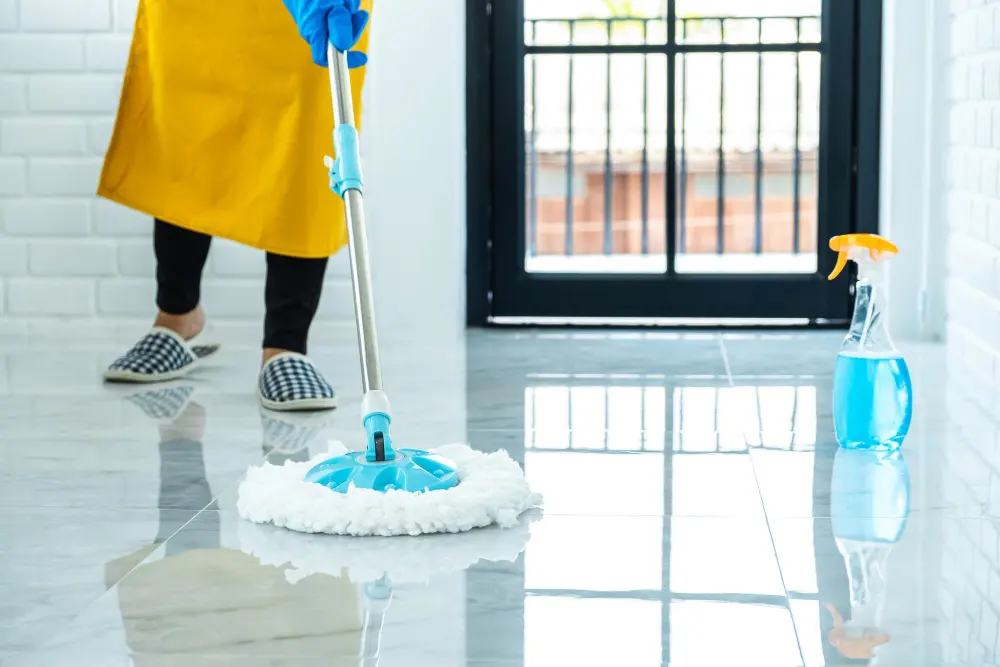
Applying a vinegar cleaning solution is as simple as using other cleaning products. Follow a step-by-step process to clean the surface without damage. Here is what you need to do to clean floors with vinegar and water:
-
Sweep or Vacuum the Floor First
First of all, sweep the target area of the floor to remove visible or loose dirt before you apply the vinegar solution. You can also vacuum the surface for this purpose.
-
Dilute the Vinegar Properly
Next, choose a suitable vinegar concentration and dilute it to make it safe to apply. Do not pour undiluted vinegar onto the floor.
-
Test the Solution in a Hidden Area
We recommend applying the solution to a hidden area first to test if it works properly. This way, you can avoid damaging your floor without intending to do so.
-
Mop With as Little Moisture as Possible
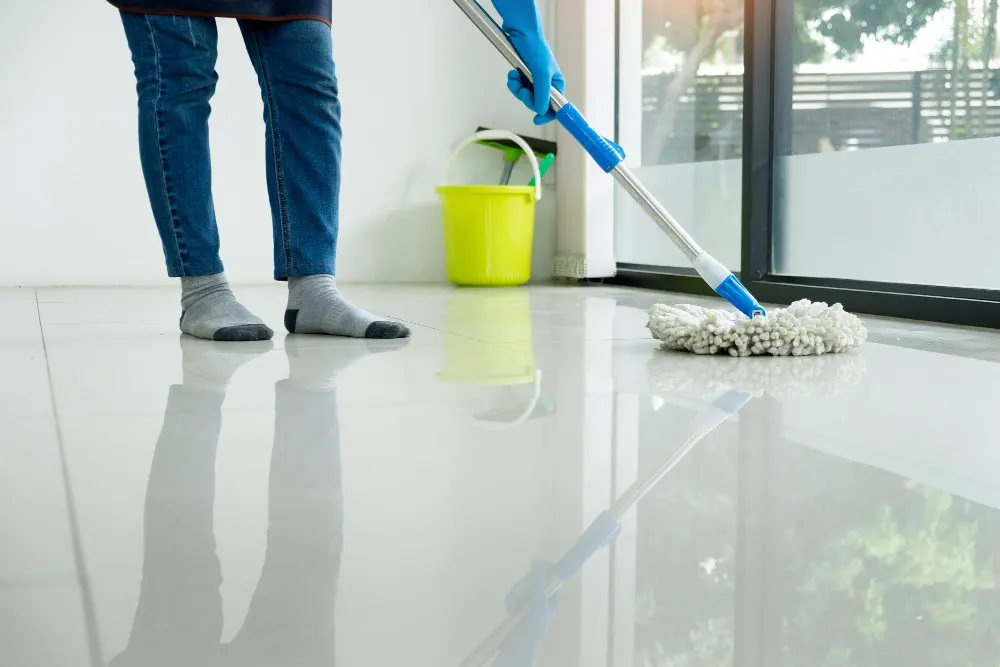
Then, apply the solution with a well-wrung mop and clean section by section. By doing so, you make sure that the surface dries quickly without any additional work.
-
Rinse and Dry When Needed
If you need to rinse or dry further, use clean water and a mop with as little moisture as possible.
How to Make a Vinegar Cleaning Solution?
By now, you should be clear about where to apply vinegar and where to avoid it. Now, it is time to learn how exactly to prepare that cleaning solution using vinegar.
First, you need distilled vinegar, which is easily available in the market. The second component of the solution is water. Do not guess the dilution ratio. Instead, you must combine them so the solution’s acidity does not affect the floor finish. Here is how you can do it safely:
- Take ½ cup of white vinegar.
- Then take 1 gallon of warm water.
- Mix them together in a bucket.
Note: If your flooring manufacturer allows diluted vinegar, follow the dilution ratio it recommends. Avoid using a homemade vinegar solution when the care guide calls for a neutral-pH floor cleaner.
Do not increase the vinegar concentration simply because the floor is dirtier. Use a cleaner approved for the flooring type if diluted vinegar does not remove the buildup.
The Final Words
In short, vinegar can be used to clean the floors, but that does not mean you can use it everywhere. Vinegar may be suitable for some ceramic, porcelain, vinyl, or other resilient flooring products, but only when the manufacturer specifically allows it. If your floor type does not support vinegar application or has excessive grime and dirt, it is better to consider professional cleaning rather than applying DIY solutions.
We, at Alex Cleaning, are here to remove all kinds of grease and dirt from your floors, whether on visible surfaces or under furniture. Our team uses cleaning products selected for the flooring material and condition, with care taken to protect the surface and grout. If you need a quick visit, call us at (215) 677-9717 today and let’s set the visit around your schedule.
FAQs
What is cleaning vinegar good for?
You can use cleaning vinegar to remove some mineral buildup or everyday grime from ceramic and porcelain surfaces. It can also be used for vinyl and linoleum, but only if the manufacturer approves.
What vinegar is good for cleaning?
Distilled white vinegar is considered one of the most suitable options for cleaning purposes due to its colourless nature and 5% acidity.
Can Vinegar Damage Floor Grout?
Yes, it can damage cement-based grout because of its acidic nature. It breaks down and dissolves the calcium carbonate of the cement, which then weakens the material over time.
Does Vinegar Disinfect Floors?
Don’t rely on vinegar to disinfect floors. If you need disinfection, use an EPA-registered disinfectant approved for your flooring type and follow the label directions.
How Often Can You Clean Floors With Vinegar?
Once a week is enough for commonly used floors. For less-used floors in your home, you can apply vinegar solution every 2 to 3 weeks.