

Dust settles quickly on shelves, floors, carpets, and bedding, even in homes that are cleaned regularly. While you cannot eliminate it completely, a few cleaning and prevention habits can help keep it under control.
Unfortunately, many homeowners and families aren’t aware of the right practices to reduce home dust. If you are also among them, there is nothing to worry about.
In this guide, you will learn all the essential tips to reduce household dust and slow down how quickly it builds up. Read it all and use what you learn to keep your home healthy.
Where Does Most Dust in Your Home Come From?
Dust falls into two main categories. The first one is outside dust, and the second is inside dust.
As the names suggest, one comes from outside your home and the other is generated inside. Outside particles can be any dust that enters your home and is invisible to the naked eye. For example:
- Dirt
- Pollen
- Spores
- Pollutants
Inside dust, on the other hand, usually comes from your skin and hair. It might also be generated from microscopic pests, fabric fibers, and pet residues. Further, you may also have dust mites living in soft fabrics in your home.
Together, all these internal and external factors make your home environment unhealthy and require proper cleaning.
What Is Household Dust Made Of?
As mentioned earlier, there could be different types of dust in your home, and each of them comes from a different source. So, when planning to get rid of those particles, it must be in your knowledge where exactly they are produced. That way, you can better control them, both inside and outside of your home.
Here is a quick breakdown of what that dust is usually made of:
| Dust Type | Common Source |
| Skin flakes | People and pets |
| Fibers | Clothing, bedding, carpets |
| Hair | People and pets |
| Pet dander | Pets |
| Soil and dirt | Shoes, open doors, open windows |
| Pollen | Open windows, clothing, plants |
| Insect debris | Dust mites and other insects |
| Outdoor particles | Traffic, smoke, construction |
Is Home Dust a Health Risk?
A common question we often hear at Alex Cleaning is, “Is home dust a health risk?” The answer is yes. Household particles may contain biological allergens and toxic chemicals.
So, when you inhale during normal breathing, you might take those harmful particles into your lungs. That slow yet regular exposure to fine contaminants may lead to short-term or long-term health issues.
For example, the air in your home might contain invisible particles of dust mites’ body parts and droppings, which are one of the main triggers for people with asthma.
NCHH states that you might have to face other allergic reactions if you keep ignoring the household dust. That means you need to take it seriously and plan a proper cleaning routine for effective control.
How to Reduce Dust in Your Home and Keep It Under Control
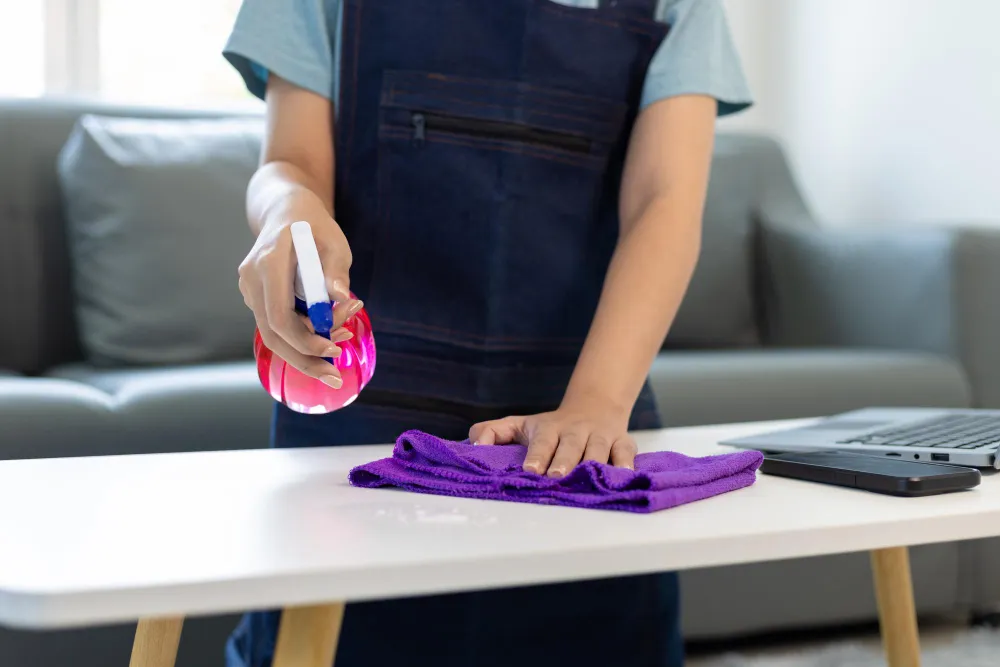
Many American homeowners only pay attention to dust when it is slightly visible on surfaces, like countertops or bed sheets. Remember, dust might be there in your kitchen, bed, drawing room, and living areas, even if there are no visible signs.
So, it is essential to maintain a regular routine to keep it under control. But the question is, what exactly to do? Here are some effective practices that enable you to reduce dust in your home:
Dust From the Top Down
Many homeowners start dusting randomly, which is not a good approach. For example, they might start from a table or lower shelves and then dust the things right above them.
If you do so, you do nothing except leave the dust from one surface to the other. So, it is always a good idea to move from top to bottom when you are removing fine debris.
While it appears to be a small directional change, it ensures that anything that dislodges falls onto surfaces you have not cleaned yet.
Use Damp Microfiber Cloths
We often use dry cloth or feather duster to clean the dirt. While it may help to remove the particles, it also leads to losing many of them to other surfaces.
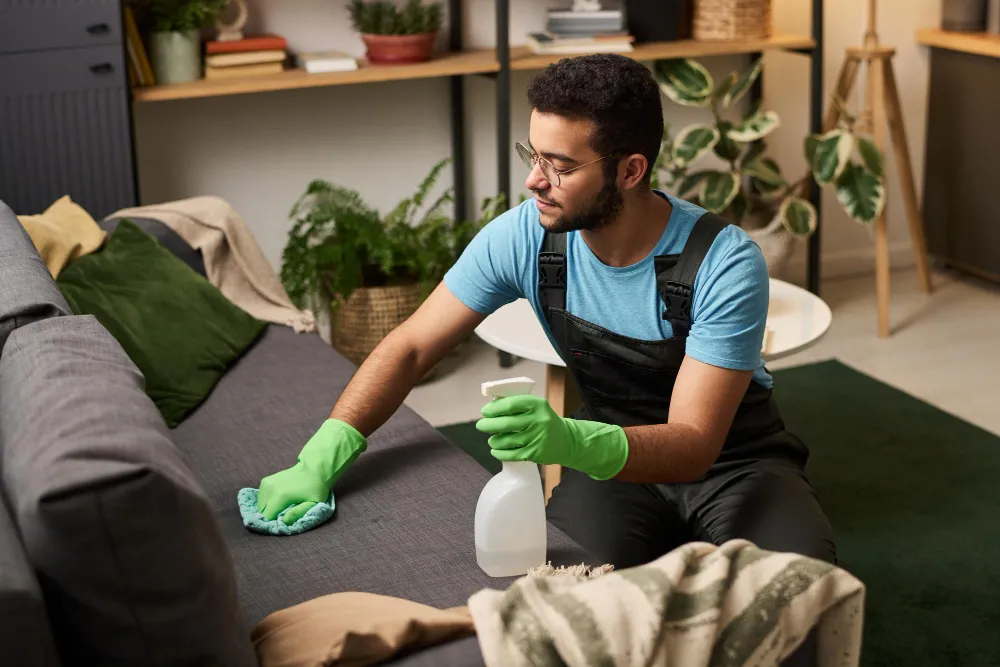
But if you use a slightly damp microfiber cloth, you can easily collect most of the particles without spreading them nearby.
Also, fold the cloth before you start and turn it as the section becomes dirty. You can also rinse it or swap it for a clean one before moving to the next item.
Vacuum Floors, Rugs, and Carpets
Vacuuming is the most effective way to get rid of household dust, but it works only when done properly. Since carpets and rugs collect the most dirt and invisible allergens, vacuum them regularly. This practice is especially important if you have high-pile rugs.
Also, use it on floors and try to reach as many hard-to-reach areas as possible.
One important factor that should be in your mind is that vacuumed dust often tries to escape the vacuum cleaner into the air. So, we recommend using a HEPA filter so that all the vacuumed dust is collected. Even the EPA (U.S. Environmental Protection Agency) encourages the use of this filter.
Mop Hard Floors After Vacuuming
While a vacuum cleaner catches most of the dust, there are still fine particles left on the floor. So, you should not rely completely on vacuuming. Instead, mop all the hard surfaces right after that so you can stop the residual debris from becoming a potential health risk.
Clean Under Furniture
Many homeowners pay attention to just visible or easy-to-reach surfaces and leave areas under furniture as they are. This often results in a fine layer of dust stuck on the ground, which then becomes hard to clean.
The hidden residue of dirt and allergens also keeps creating health risks without you even knowing about it.
So, instead of dusting only the visible surfaces of furniture, make sure that you also clean the ones under them. You should do it twice a week, or at least once a week.
Wash Bedding, Curtains, and Other Fabrics
Fabrics are also some of the biggest dust collectors in a room or home. Whether it is your bedding, curtains, cushion covers, or clothing materials, they all catch fine particles that are impossible to see with the naked eye.
Some of the common ones among them are
- Skin flakes
- Pollen
- Allergens
Therefore, make sure that you regularly wash all your bedding, curtains, and other fabrics. According to the National Institute of Environmental Health Sciences, it is recommended to use hot water at 130 to 140°F when washing your bedding for complete removal of dust mites.
Keep Shoes and Outdoor Dirt at the Door
You do not always need big steps to make an impact. The same is the case with dusting. Sometimes, you can achieve your goal by simply changing your habits or adopting a few effective practices. For dust removal, these simple steps are
- Using a good mat at the doors that you use the most.
- Leaving outdoor shoes near the entrance.
- Cleaning or shaking out doormats regularly.
- Wiping muddy pet paws before they move in.
While these steps are not enough to keep all the outdoor dust at the door, they can collectively make a big difference.
Reduce Clutter That Collects Dust
Not everything is worth keeping at home. Some items are just dust collectors or a source of mess. To reduce dust in your home, identify and remove unnecessary dust collectors.
By reducing clutter, you automatically remove items that could store dust longer. For example, it could be a pile of loose papers or old magazines. Similarly, unused decorations, cardboard boxes, and cables can collect dust.
So, if you no longer need something, it is better to remove it. When you have less clutter, the dust automatically decreases.
Stay on Top of Pet Hair and Dander
Living with pets is normal, but living with the dust they produce is not. Families with pets like dogs, cats, and common birds should be more careful about dust. The reason?
They can simply ignore the danger, which is usually small in size and can easily become part of the material circulating around the home. That ultimately results in more allergic reactions and hygiene problems.
So, whatever type of pet you have, take care of their grooming and try to brush them outside, if possible. Most importantly, wash their beds and belongings regularly.
Simple Ways to Reduce Airborne Dust
There are some microscopic particles that fail to reach any surface and keep floating in the air. They may contain a mixture of organic and inorganic components. Due to their ability to float in the air, they are also called airborne dust, which needs as much attention as standard dust.
You can reduce the amount of that suspended dust by following the 5 practices below:
-
Replace or Clean HVAC Filters as Recommended
Your first preference should be to clean or replace HVAC filters as per the guidelines of the supplier or manufacturer. For particle filtration, the EPA recommends at least MERV 13, or as high a rating as the particular system can accommodate.
-
Use a HEPA Air Purifier Where It Makes Sense
Another step you can take is to purify the air circulating around your home. The best option is a HEPA air purifier. According to the EPA, this type of filter can remove at least 99.97% of airborne particles with a size of 0.3 microns.
-
Keep Vents and Registers Clean
HVAC vents and registers also need equal attention, like filters. This is because they often collect a fuzzy layer of dust, and airflow pushes it back into the room. So, make sure that you clean them with a damp cloth or a vacuum attachment.
-
Seal Gaps Around Windows and Doors
If there are any gaps or airflow leaks around your windows and doors, you should fix them as well. By doing so, you stop the floating dust from entering your room, especially when your doors and windows are closed.
-
Keep Indoor Humidity in a Healthy Range
One more effective approach is to make sure that the humidity of your home remains in the healthy range. But what exactly is that range? EPA answers it by recommending a relative humidity of 30 to 50 percent for homes.
-
Limit Open Windows on High-Pollen Days
If you or any of your family members are allergic to seasonal or regular pollens, you should be careful about opening your windows. To avoid unnecessary exposure, you can keep an eye on daily pollen forecasts and limit open windows on high-pollen days.
Is Regular Cleaning Enough to Control Dust: The Verdict
Regular cleaning is undoubtedly a great way to reduce the amount of dust; it is not enough to fully control the dust. For effective dust removal, you need to hire professional services alongside your routine care, especially if your home has a lot of clutter or is too big enough to handle alone. Expert cleaners not only wipe out dust from visible surfaces but also reach the areas that you either skip intentionally or unintentionally.
That is exactly what we do at Alex Cleaning. We have been cleaning homes across the Richboro, Bucks County & Greater Philadelphia area for over 20 years. We customize our cleaning checklist for your home and make sure that you see a clear difference once we leave. So, whenever you need a helping hand along with your routine cleaning, you can call (215) 677-9717. Our team is always ready to help.
FAQs:
How often should you dust your home?
We recommend dusting all the visible areas of your home twice a week and all the hard-to-reach areas once a week. But if your home produces more or less dust than usual, you can adjust your schedule accordingly.
How to reduce dust mites in your home?
The most effective way is to lower your indoor humidity below 50% and wash all your bedding in hot water at least once a week. Along with that, do not forget to follow routine dusting practices.
How to reduce the amount of dust in your home?
You can do so by reducing the clutter in your home. At the same time, changing HVAC filters, vacuuming carpets and rugs, and regularly cleaning all the surfaces can also help a lot.
Do air purifiers really reduce dust?
Yes, they do, but they only catch the dust floating in the air. The particles that have already settled down on furniture, clothing, or other surfaces remain out of the reach of these devices.