


You clean your windows, step back, and then the sun comes out. Suddenly, the glass looks worse than before. You can see streaks running in every direction and smears where you wiped the hardest. The problem is rarely the effort. It is usually the tools, the solution, or one small technique gap.
This guide covers all three, including why streaks happen, what to use to clean windows, and when a window genuinely needs a professional to get it right.
Quick Summary:
To clean windows without streaks, apply a few drops of dish soap in warm water or a 50/50 vinegar-water solution, scrub the glass evenly, and squeegee in overlapping S-pattern strokes. Always clean frames and tracks before touching the glass, and work on a cloudy day to stop the solution from drying too fast.
Why Do Windows Streak in the First Place?
Most streaks occur due to minor issues during the cleaning process. Once you know the cause of streaks, the fix becomes obvious.
Let’s have a look at the most common ones:
- The Solution Dried Too Fast: On a warm, sunny day, the cleaning solution may evaporate from the hot glass in under 60 seconds. What is left behind are dissolved minerals and soap residue that have baked into the surface in thin, cloudy lines.
- Too Much Soap: Using a little dish soap is very effective on glass. Use too much, and it leaves a film that no squeegee can fully remove.
- The Wrong Wiping Tool: Paper towels and cotton cloths deposit fibers on glass. That fiber layer picks up a static charge, which pulls dust right back onto the surface within hours of cleaning.
- A Dirty Squeegee Blade. One small nick or debris particle on the rubber blade leaves a consistent streak line across every single pass on glass.
Which Tools Do You Actually Need to Clean Windows Well?
The tools that make a real difference in cleaning windows include:
- A squeegee with a quality rubber blade: 10 to 12 inches for standard windows and 18 inches for large picture windows.
- Microfiber cloths: Keep one piece damp for applying the solution and one dry for the edges and corners.
- A scrubber or applicator sleeve: It is more effective than a spray bottle alone on exterior glass.
- A soft-bristle brush or vacuum brush attachment: For frames and tracks before you touch the glass.
What to Stop Using (And Why)
Using the right tools matters, but avoiding the wrong ones is just as important. Many common household cleaning items can leave streaks, scratches, lint, or residue on window glass.
| Tool | The Problem |
| Paper towels | Leave lint and create static that attracts fresh dust within hours |
| Cotton rags or bath towels | Shed fibers and smear dissolved dirt rather than lifting it |
| Newspaper | Ink can transfer to frames; does not give streak-free results |
| Abrasive scrubbing pads | Permanently scratch glass and damage tinted or coated surfaces |
| Ammonia-based cleaners on coated glass | Degrades low-E coatings and tinting film over time |
What Is the Best Solution for Cleaning Windows?
Interior and exterior glass faces are exposed to entirely different contaminants. The same solution does not serve both equally well. So, let’s discuss both of them separately:
Best Solution for Indoor Windows
Interior glass mainly collects cooking grease, condensation residue, and fingerprint oils. Here are two of the best ways to clean indoor windows that work well:
- Soap-based solution: Use two to three drops of dish soap in a bucket of warm water. That small amount cuts through grease without creating a soapy film.
- Vinegar-Based Solution: Add equal parts of distilled white vinegar and water to a spray bottle. This solution works especially well on bathroom and kitchen windows. Using distilled water instead of tap water also helps because tap water contains dissolved minerals that can leave new spots as it dries.
Note: Avoid ammonia-based commercial cleaners on interior glass. Many modern double-pane windows use a low-E coating that ammonia degrades over time, reducing energy efficiency. The EPA’s Safer Choice program is a reliable resource for identifying effective, non-harsh glass cleaners.
Best Outdoor Window Washing Solution
Exterior glass picks up a lot more than interior glass does. Pollen, road exhaust, and bird droppings are the usual suspects. In the greater Philadelphia area, heavy spring pollen from suburban tree cover and winter road salt on lower panes near driveways worsen it.
Two options work well here:
- Best DIY Outdoor Window Washing Solution: Add one teaspoon of dish soap to a full bucket of warm water. The higher water volume keeps the scrubber wet across large exterior panes.
- For Heavier Grime: Add one-quarter cup of white vinegar to the bucket. Vinegar handles mineral deposits and light oxidation better than soap alone. If hard water stains are still not shifting, a commercial calcium and lime remover applied carefully with a cloth is the next step. Test a small area first, especially on coated or tinted glass.
A Quick Note on Glass Type
Here is what to keep in mind before you start:
- Tinted glass: No ammonia-based cleaners. They degrade tinting film and cause fading over time.
- Low-E coated glass (standard in modern double-pane windows): Avoid abrasive tools and concentrated acidic solutions. Mild soap and water are safe and effective.
- Frosted or etched glass: Skip the squeegee; use a soft microfiber cloth in gentle circular motions, then blot dry.
How to Clean Indoor Windows the Right Way
You can follow this sequence for indoor window cleaning. Each step prevents the next one from creating a new problem.
Dust Frames and Sills First
Dust the frames and sills before applying any liquid. If you skip this step, the wet cloth drags dry dust across the glass, instantly turning it into muddy streaks.
Clean Tracks Before the Glass.
Vacuum debris from the channel, then scrub any mold with a damp cloth and baking soda paste. Mold in window tracks is common in older Pennsylvania homes, so skipping this step means debris falls onto your wet pane mid-clean.
Apply the Solution and Let it Dwell
Cover the full pane with cleaning solution. On greasy areas, wait 10 to 15 seconds before moving. This gap gives the solution time to break the bond between the dirt and the glass.
Squeegee From Top to Bottom
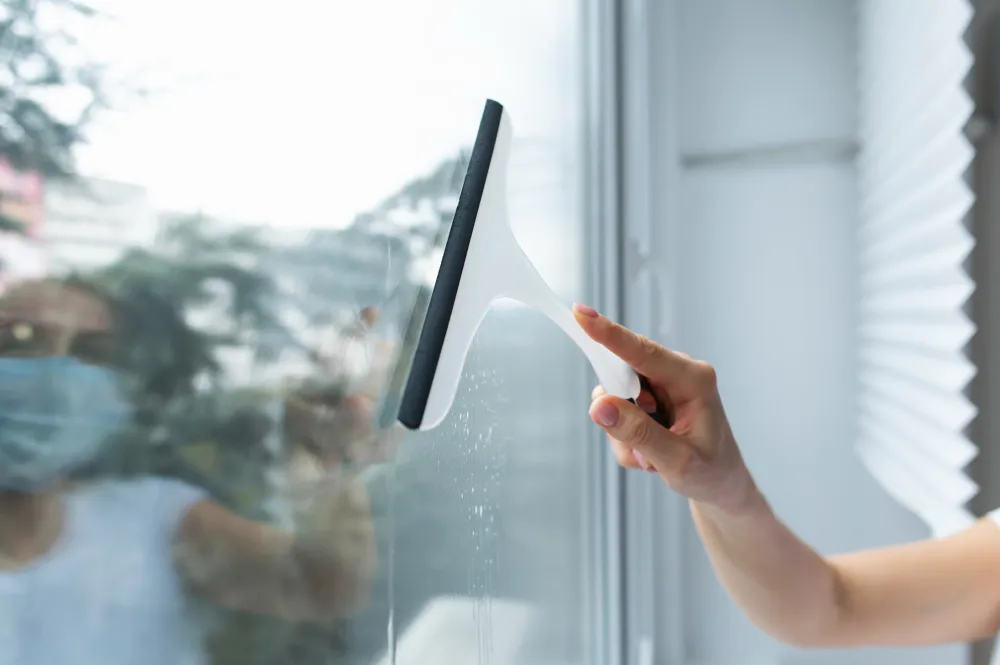
Hold the blade at a 30- to 45-degree angle, pull in overlapping S-pattern strokes, and wipe the blade with a dry cloth after each pass.
Detail Edges and Corners
Fold a dry microfiber cloth into a firm edge and run it along all four glass borders. This is where most post-cleaning streaks actually come from.
Inspect At An Angle
Stand 45 degrees to the glass in natural light, not looking straight through it. This technique makes it easier to spot leftover streaks, smudges, or haze that are harder to see straight on.
How to Clean Outside Windows without Streaks (And Without Risking Your Safety)
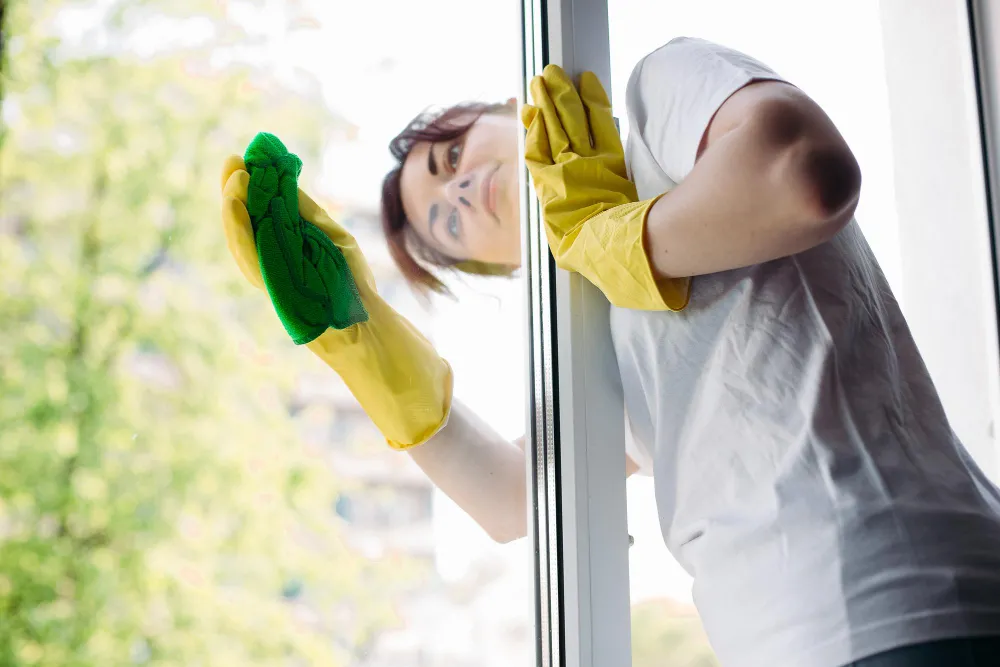
The Outdoor Cleaning Sequence
- Before applying any solution, rinse the exterior glass lightly with a garden hose on a low, wide-fan setting. This rinsing removes loose pollen and debris that would otherwise scratch the surface when scrubbed.
- Apply your outdoor window washing solution with a scrubber sleeve, squeegee in overlapping strokes, and finish edges with a clean microfiber cloth.
- After the glass dries, apply a hydrophobic glass treatment available at most hardware stores. It causes water to bead and roll off rather than sit and evaporate into spots.
How to Keep Windows Clean Longer
How you maintain windows between cleans determines how long those results actually last. Three habits make the biggest difference:
Apply a hydrophobic treatment after every exterior clean
For homes near busy roads or irrigation systems, apply a hydrophobic treatment to create an invisible, water-repelling barrier on the glass. It can double the time between full cleans.
Quick Maintenance Between Deep Cleans
A dry microfiber wipe of sills and frames every two to three weeks prevents buildup from hardening. Between deep cleans, a simple vinegar-spray touch-up keeps interior fingerprints and pet nose prints from becoming permanent eyesores.
Seasonal schedule for the Philadelphia and Bucks County area
Since our weather in the Philly and Bucks County area can be a bit of a roller coaster, the best way to keep your glass clear is to time your cleaning with the local seasons.
Here’s a brief overview of how to stay ahead of the weather:
- Spring: Clean after peak pollen ends (late April to mid-May). Cleaning during pollen season means re-cleaning within days.
- Summer: Target condensation-prone kitchen and bathroom windows with a vinegar-water solution for mineral spots left by evaporating moisture.
- Fall: Clean exterior glass after leaves have fallen but before extended wet weather; leaf tannins stain glass and frames if wet leaves sit against them.
- Winter: Rinse lower-floor panes near driveways after heavy salting events. Road salt etches glass slowly if left in contact for multiple weeks.
When Is It Time to Call a Professional Window Cleaner?
DIY is fine for a quick touch-up, but certain window-cleaning situations aren’t worth the risk or the headache. If you’re dealing with hard water stains or construction mess like paint and caulk, a professional team has the specialized tools to clean it without scratching the glass.
You should also keep safety concerns in mind. If you have to wobble on a ladder or manage a large commercial storefront, it’s much smarter to let an insured crew handle the height and the heavy lifting.
Conclusion
Streak-free windows depend on the right sequence, solution, and technique. Clean frames and tracks before glass. Match your solution to the type of glass and what is on it. Use a clean squeegee blade with overlapping S-pattern strokes. These three things explain the gap between a frustrating result and a genuinely clean window.
For interior and accessible exterior glass, DIY works well with the right setup. For hard mineral buildup, high exterior windows, post-construction residue, or commercial facilities that need reliable, scheduled results, professional cleaning is worth it for both quality and safety.
Alex Cleaning has served homeowners and businesses across Richboro, Bucks County, and the greater Philadelphia area for over 20 years. We use eco-friendly, non-toxic products on every job — safe for families, pets, and landscaping. One-time, seasonal, and recurring service available with transparent pricing and a 100% satisfaction guarantee.
Get a free estimate or call (215) 677-9717.
Frequently Asked Questions
Does it matter whether I clean the inside or outside of the windows first?
Clean interior glass first. That way, if a streak remains after doing both sides, you can tell which surface it is on and fix it directly without guessing.
Why do my windows look worse right after cleaning than before?
Usually, it is residue from a previous cleaner, such as old spray wax or a film-forming product, that the new cleaner lifted but did not fully remove. A second pass with 50/50 white vinegar and water typically clears it.
Is it safe to use a pressure washer on windows?
A low-pressure wide-fan rinse is fine for removing loose exterior debris before cleaning. Direct high-pressure water can force moisture behind double-pane seals, damage weatherstripping, and crack older single-pane glass.
How often should windows be professionally cleaned?
Most homes do well with a professional deep clean twice a year, usually in spring and fall, with quick interior microfiber maintenance every two to three weeks in between. Commercial properties and rental turnovers typically need professional cleaning monthly or quarterly.